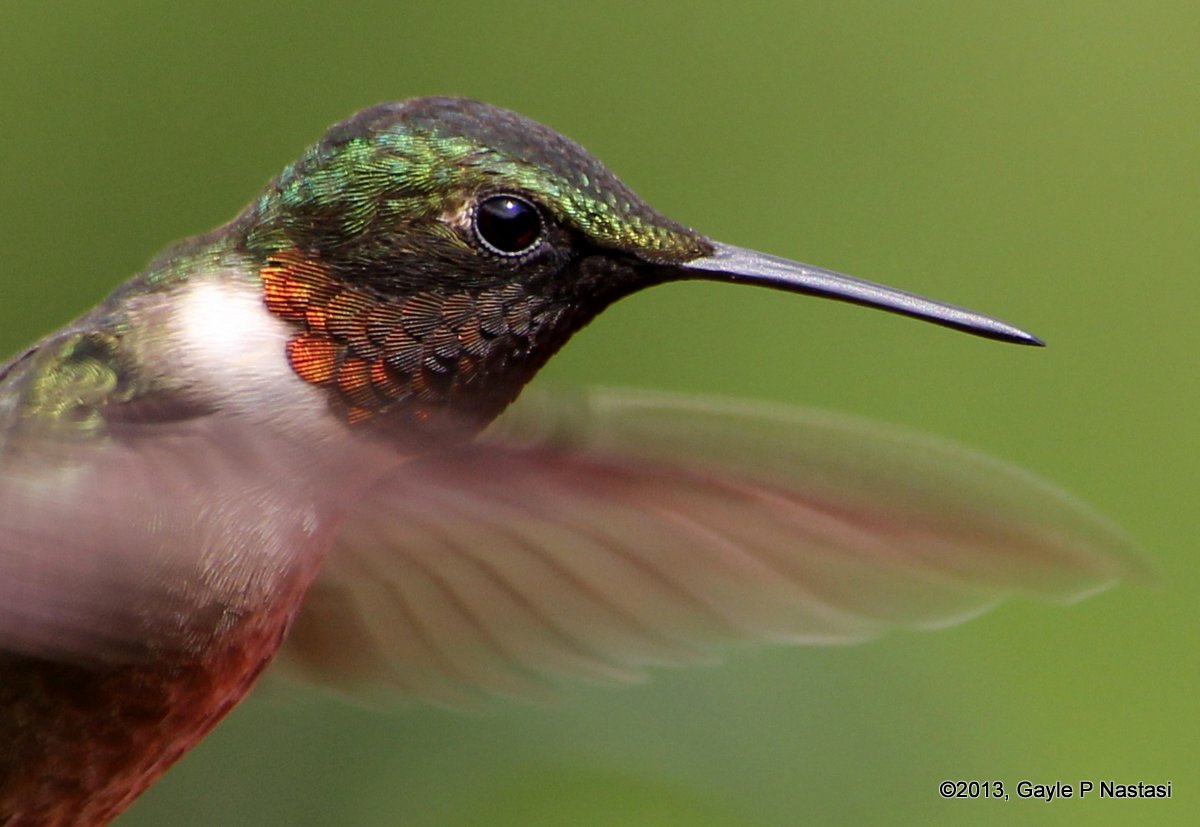
Sometime in late April, just about every year, people who follow me on Facebook will be greeted by a single-word, all-caps post.
HUMMINGBIRD!
In most cases, my feeder has been up for a week or two, and I’ve been hovering at the window, watching, waiting, anticipating. That first little jewel of a body, those first nearly-invisible rapidly-beating wings, and I just have to shout it out from the rooftops.
Well, usually from my cellphone.
The Hummies Are Home!
There are approximately 375 species of hummingbird in the world, all of which exist only in the Americas. In Eurasia and Africa, there are species that resemble hummingbirds in some ways, but these are the completely unrelated Sunbirds. Hummies live only in the New World.
These winged wonders range from the tiny Bee Hummingbird, at .07 ounces, to the Giant Hummingbird. Even he is not very Giant, weighing in at a maximum of .85 ounces. Hummingbirds, despite their miniscule size, are amazingly resilient travelers, migrating thousands of miles between their warm winter homes and their breeding grounds. The little Rufous Hummingbird holds the record; some individuals travel from Mexico to Alaska every year, around 3900 miles.
Hummingbirds get their common name from the sound their wings make. The wings beat so fast, for smaller species up to 99 beats per second, that they vibrate the surrounding air. Their hum is not just a cool sound that lets us know to duck as we’re filling the feeder. It’s also a means of communication that marks territory and attracts mates. Their specialized hovering flight also allows them to nosh on their favorite fare. Hummies are all nectarivores, having co-evolved along with the over 7,000 species of nectar-producing flowers they feed on throughout their range. As nectar feeders, hummingbirds are important pollinators for many of these plants. These little birds also feed on the pollen and tiny insects inside the blossoms.
Ruby-throated Jewels
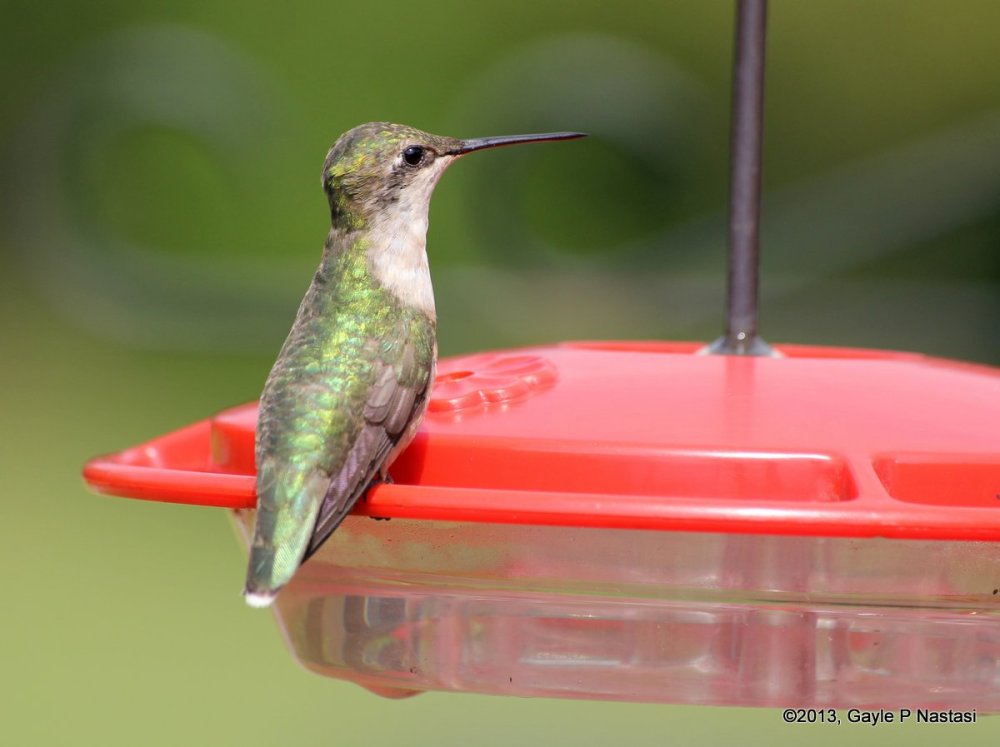
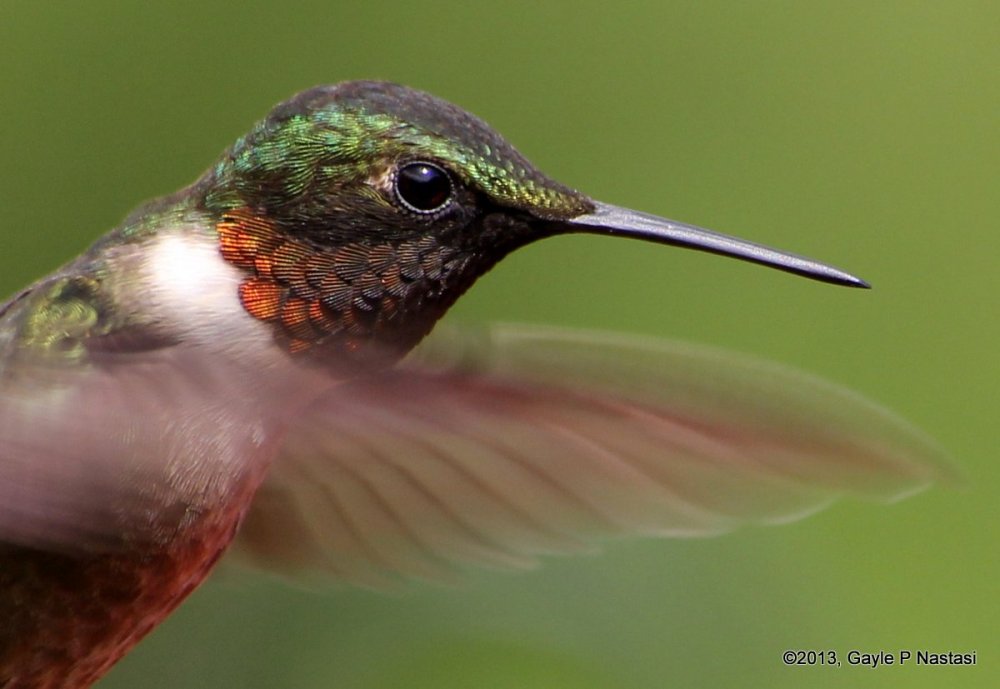

Although there are nearly 400 species, with approximately 25 summering in the United States, there is only one that triggers my HUMMINGBIRD! excitement every year. The only species that breeds on the east coast of North America, including my own stomping grounds, is the Ruby-throated Hummingbird.
Ruby-throateds are the most common hummingbird species, traveling from their winter digs in Central America, Mexico and Florida (as far south as Panama) to their breeding grounds. This covers much of eastern North America, with a special affinity for the northeast.
These little guys are very familiar to me now, though before I moved to upstate New York, I had only seen one or two in my life. Now, I’m thrilled to share my space with them every year. It’s always exciting to see them come home. The adult males arrive first, and the females will follow a week or two later.
Ruby-throated Hummingbirds are metallic green above, with grayish-white undersides. The males have a distinctive iridescent ruby-red gorget (throat) that can look black from certain angles, and forked tails (the female’s has just a shallow notch). The young resemble the females until they molt into their adult feathers. The red gorget of the juvenile male often comes in a few feathers at a time, making it appear that he’s wearing a necklace.
Mom has sole care of home and children; she builds the nest and raises the young. Mister just shows off, chases other birds away from my feeders, and does his due diligence to make sure the species survives.
But he looks good (and knows it, too).
Messengers
Some native cultures see hummingbirds as messengers from the spirit world, bringing comfort, and even good luck, from loved ones on the other side.
A few weeks ago, I had connected with a dear kitty friend. This sweet cat, whom I’d known since she was very young, was now nineteen. She was in the dusk of her life, and gracefully approaching the veil. A couple of days later, I was outside in the backyard in the early morning. A hummingbird flew within six feet of me, just on the other side of the fence. It hovered, perfectly still, perhaps ten feet in the air, right beside me. I had no doubt that it was trying to get my attention. Once I acknowledged it, said good morning, it flew back toward the front of the house. When I got inside, I checked my email.
There was a note from the kitty’s mom. Her darling girl had passed away just a short while before.
Thank you, little hummingbird, and thank you sweet kitty, for honoring me in such a beautiful way.
Photos and text ©Gayle P. Nastasi,
all rights reserved
 Gazehound's